The National Weather Service (NWS) has placed much of California under a tiered set of heat alerts that tip the state into a roughly 60-hour stretch of triple-digit afternoons from Sunday, May 10 into Tuesday, May 12 — a snap heatwave the NWS itself has flagged as very rare for mid-May, with temperatures 10 to 30 degrees Fahrenheit above seasonal normal for the affected zones. The highest-tier Extreme Heat Warning now covers desert Southern California — Imperial County, the Salton Sea region, the Coachella Valley, the deserts of San Diego County, and the San Gorgonio Pass near Banning — areas that together hold roughly 450,000 residents, with forecast highs running 105 to 112°F through the warning window. Phoenix, Arizona is under a parallel extreme-heat warning, and a broader belt of less-severe Heat Advisories stretches across Central California, taking in Fresno, Bakersfield, Merced and other San Joaquin Valley cities home to millions more.
The headline forecast number is 111°F for Death Valley on Monday, with Palm Springs at 108°F, Borrego Springs at 107°F, Barstow at 102°F, and afternoon temperatures in pockets of Imperial County as high as 112°F. Inland, Fresno is projected to hit 102°F on Monday — which, if it verifies, would be the earliest the city has ever recorded that temperature in modern records that stretch back more than a century. The previous earliest 102°F mark in Fresno was May 12, 2013, per Brian Ochs, meteorologist at the NWS office in Hanford, California. "People won't be as used to it," Ochs warned about the early-season timing. The combination of the rare May calendar, the desert peaks, and the Central Valley records is what is making this a structurally bigger story than a routine hot weekend.
What's been warned and where
The cluster of NWS alerts has three tiers and they map onto three different threat profiles. The top tier — Extreme Heat Warning — was upgraded from a watch on Friday, May 8 by the NWS offices in Phoenix and San Diego and covers the desert belt described above through Monday evening, with the San Diego-issued portion (Coachella Valley, San Diego County deserts and the San Gorgonio Pass) running through Tuesday evening. An Extreme Heat Warning, in the NWS classification system, is reserved for "extremely dangerous heat" that is expected or already occurring and indicates a high risk of heat-related illness for the general public if precautions are not taken.
The middle tier — Extreme Heat Watch — is in effect for adjacent areas where conditions are favourable for dangerous heat but the exact timing or intensity is still uncertain; watches are how forecasters telegraph two or three days in advance that the warning may follow. The third tier — Heat Advisory — applies to most of the populated Central Valley belt, including Fresno, Bakersfield, Merced, and other San Joaquin Valley cities. A Heat Advisory is the lowest of the three operational levels but it is precisely the level at which large-population public-health departments mobilise cooling-centre activations, school and workplace adjustments, and outreach to vulnerable populations.
The forecast peaks: Death Valley 111°, Palm Springs 108°, Fresno 102°
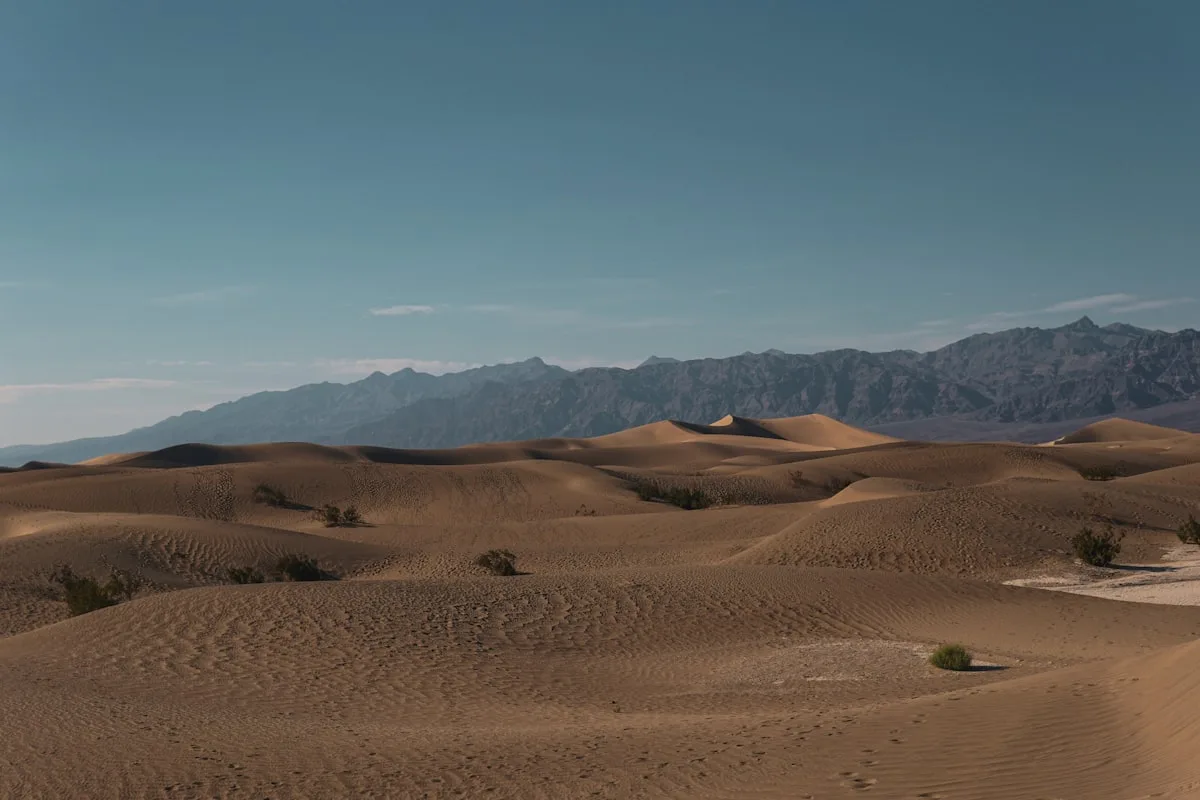
The hottest single locations under the warning are the desert basins, and the numbers form a clean tier. Death Valley sits at the top at 111°F, a number that is hot even by Death Valley's own historical standards for mid-May. Palm Springs at 108°F, Borrego Springs at 107°F, and Barstow at 102°F make the second tier. Western Imperial County and the Salton Sea flank are forecast for 105 to 112°F in the warning window — the latter figure marking the upper bound of NWS modelling for the airmass and the practical ceiling on what the desert grid and infrastructure are being asked to absorb. The NWS classifies the threat for these locations as "Major Heat Risk," its second-highest impact rating, with explicit guidance that the heat is dangerous even for people accustomed to desert conditions.
Inland but outside the deserts, the Central Valley numbers are arguably the more newsworthy ones because of the calendar context. Fresno's projected 102°F on Monday would be the earliest in the year the city has hit that mark since the modern record began, beating the previous May 12, 2013 benchmark by a day. The San Joaquin Valley's forecast envelope is broadly 102 to 105°F for the warning window, with Bakersfield, Merced and the foothills tracking near the upper end. AccuWeather senior meteorologist Tyler Roys framed the trend operationally: "The second surge of summerlike heat this spring is returning to the West. Temperatures will climb 20 to 30 degrees in just a few days, which can catch people off guard." The rapid ramp — not the absolute number — is what raises the population-level risk for heat illness this far ahead of seasonal acclimatisation.
Why the Bay Area and the Los Angeles coast stay relatively cool
The familiar California paradox during a heat dome is that the coast and the inland valleys diverge sharply. The San Francisco Bay Area and the Los Angeles coastal strip will see meaningfully warmer-than-normal weather but not the desert peaks: San Francisco is forecast for 81°F on Monday, Oakland 84°F, San Jose 93°F, Napa 90°F, and Livermore and Gilroy at 95°F. The mechanism is the marine layer — the dome of cool ocean air that, in a normal May, drifts inland to produce the "May gray" overcast that keeps the coast tolerable. The high-pressure system sitting over California this week is strong enough to compress that marine layer in many spots but not strong enough to scour it from the immediate coastline, which is why San Clemente is still expected to top out at 73°F on Monday and San Diego and Ventura at 76°F.
Los Angeles County sits between the two regimes. Downtown L.A. is forecast to hit 86°F on Monday, with Pasadena at 91°F, Anaheim at 86°F, Ontario at 94°F, Santa Clarita and Riverside at 95°F, Lancaster at 97°F, and San Bernardino at 99°F, while Palm Springs in the desert tier hits 108°F. The structural lesson is that the NWS's county-by-county warnings are doing a substantively different job from the national-level headline: the snap in snap heatwave is concentrated in specific desert and inland valley belts, and what looks from a distance like a single statewide event is actually three or four parallel events with different peak times and different risk profiles. The Bay Area office of the NWS has issued Moderate Risk of Heat Illness guidance for inland Bay Area zones rather than an extreme-heat warning — different language, different operational response.
"Extreme Heat Watch" vs "Extreme Heat Warning": the NWS classification
Because the alerts in play this weekend move across all three operational tiers of the NWS heat-alert system, the distinction matters for how readers should act. An Extreme Heat Watch is a forward-looking product issued days in advance when conditions are favourable for a dangerous heat event but exact timing, duration, or intensity is still uncertain. It is meant to prompt preparation — checking cooling options, planning to limit outdoor activity, watching for updates — rather than to demand immediate behavioural change. It does not mean the danger is here yet.
An Extreme Heat Warning, by contrast, is the system's most severe heat-specific product. It is issued when extremely dangerous heat is expected or already occurring and indicates a high risk of heat-related illness for the general public if precautions are not taken. During a warning, the NWS explicitly urges people to stay in air-conditioned spaces as much as possible, avoid outdoor activity, hydrate frequently, and check on vulnerable individuals. A Heat Advisory sits below both, signalling temperatures that meet advisory criteria (typically defined by daytime highs and overnight lows relative to climatological norms) but not the warning threshold. The current California cluster mixes all three tiers across the state, which is why the appropriate behaviour depends on which alert applies to a reader's specific county.
The fire-weather problem layered on top
Heat alone is the main story, but the operational concern that has moved into the morning briefings of CAL FIRE and the county emergency operations centres is the fire-weather overlay. Forecasters have warned of elevated fire danger across Los Angeles, Ventura, Santa Barbara, and San Luis Obispo counties, plus the Kern County desert and the slopes of the Mojave Desert. The mechanism is the standard one: heat dries fuels, relative humidity falls into the single-digit-to-low-teens range across the inland and desert belts, and afternoon offshore or downslope winds — which the high-pressure system aloft tends to encourage along the Central Coast and across the Mojave foothills — turn a dry vegetation matrix into a fast-spread hazard.
The structural concern is that California's mid-2020s fire regime has progressively moved earlier in the year, with major fires arriving in March, April, and May rather than the historical July-through-October window. A May extreme-heat event with this kind of red-flag overlay is therefore not an out-of-pattern event — it is the increasingly typical opening of California's fire calendar. Red-flag warnings have not been issued in every affected county at the time of writing, but the conditional ingredients are visible across the LA-to-San-Luis-Obispo corridor, and any wind event in the next 72 hours would trigger them. The grid operator CAISO typically also issues a Flex Alert (a voluntary conservation appeal) when forecast loads meet certain thresholds during heat events; whether one is called for Monday or Tuesday is the next operational signal worth watching.
The structural climate backdrop: record March, "second surge" of spring heat
This is the second spring 2026 heatwave in California, and the structural context matters. March 2026 was the hottest March on record for California — and for nine other states (Arizona, Colorado, Idaho, Nevada, New Mexico, Oklahoma, Texas, Utah, Wyoming) — per the National Centers for Environmental Information (NCEI). It was also the hottest March for the contiguous United States in 132 years of recordkeeping. Brian Ochs of the NWS Hanford office attributed both the March event and this weekend's event to "a strong high pressure system over us," with the same large-scale circulation pattern producing both episodes — a pattern that climate scientists have linked, with growing confidence, to the slowing and meandering of the mid-latitude jet stream under sustained ocean and atmospheric warming.
What comes after is also baked in for at least the next week. The Climate Prediction Center (CPC) forecasts that above-average temperatures will continue across California and the Desert Southwest for at least a week beyond Mother's Day — meaning the Monday-Tuesday warning peak is not the end of the elevated temperature pattern, even if it is the peak of extreme readings. Roys's "second surge" phrasing is precise on this point: this is a discrete heatwave event nested inside a longer warm anomaly, with a likely third surge (and possibly more) before the season transitions to summer. The implication for public-health and grid planners is that the cooling-centre, water-distribution and load-management plans that get switched on this weekend are likely to stay switched on, at lower intensity, for the rest of May.
Health: heat illness, vulnerable groups, dogs and pavement
Heat-related illnesses climb on a clinical ladder that public-health departments brief paramedics and emergency rooms on before every major heat event. The mildest end is heat cramps — painful, involuntary muscle contractions usually in the legs or abdomen, treated by stopping activity, moving to a cool place, and drinking fluids. The middle of the ladder is heat exhaustion, marked by heavy sweating, weakness, cool moist skin, fast pulse, nausea and vomiting; left untreated, heat exhaustion progresses to heat stroke, a medical emergency that requires calling 911. Heat-stroke symptoms include hot, red, dry or clammy skin; confusion, agitation or slurred speech; throbbing headache; dizziness; rapid heartbeat; and in severe cases fainting or seizures. The body's cooling system has failed at that point and the condition is life-threatening without urgent care.
The highest-risk populations are the standard ones — adults 65 and older, infants and young children, outdoor workers, athletes, those with chronic diseases (cardiovascular, respiratory, diabetes), and people without access to effective cooling in their housing. The Occupational Safety and Health Administration (OSHA) recommends regular rest periods during extreme heat and that anyone showing signs of heat illness be moved immediately to a cool, shaded location. Pets are a category authorities specifically flagged this weekend: San Joaquin Valley meteorologists urged residents to walk dogs before dawn or after dusk and to avoid asphalt — "Put your hand on the pavement for seven seconds; if it burns you, it burns them." Horses and livestock also need their troughs filled daily during the warning window, with water consumption typically doubling in this kind of heat.
What to watch over the next 72 hours
Three concrete things are worth tracking. First, the peak-temperature verification: whether Fresno actually does hit 102°F on Monday, locking in the earliest-on-record mark, and whether Death Valley and Palm Springs clear their forecast peaks of 111°F and 108°F respectively. The NWS will update its post-event records inside 48 hours of the warning window closing, and that data is the official register on which the snap heatwave framing will be evaluated. Second, the fire-weather overlay — whether Red Flag Warnings are issued for any of the LA-to-San-Luis-Obispo corridor counties, the Kern desert, or the Mojave slopes. The most consequential single event during a May extreme-heat episode is usually not the heat itself but a wind-driven ignition that turns dry vegetation into a fast-spread fire.
Third, the grid stress indicator from CAISO — whether a Flex Alert is called, and at what hours. California's grid has been re-engineered repeatedly since the rolling-blackout events of August 2020 and the near-misses of the 2022 heat dome, but a multi-day inland heat event still pushes the late-afternoon evening transition (the period when residential air-conditioning load peaks and utility-scale solar generation falls) into the tightest operating margin of the year. Beyond the immediate 72 hours, the Climate Prediction Center's extended outlook continues to show above-average temperatures across the Southwest into mid-May. The next downside scenario forecasters are watching is whether a third spring surge follows this one before the seasonal transition to summer brings the regular pattern. The reasonable working assumption for the rest of the month is that this weekend's alerts are not the last.