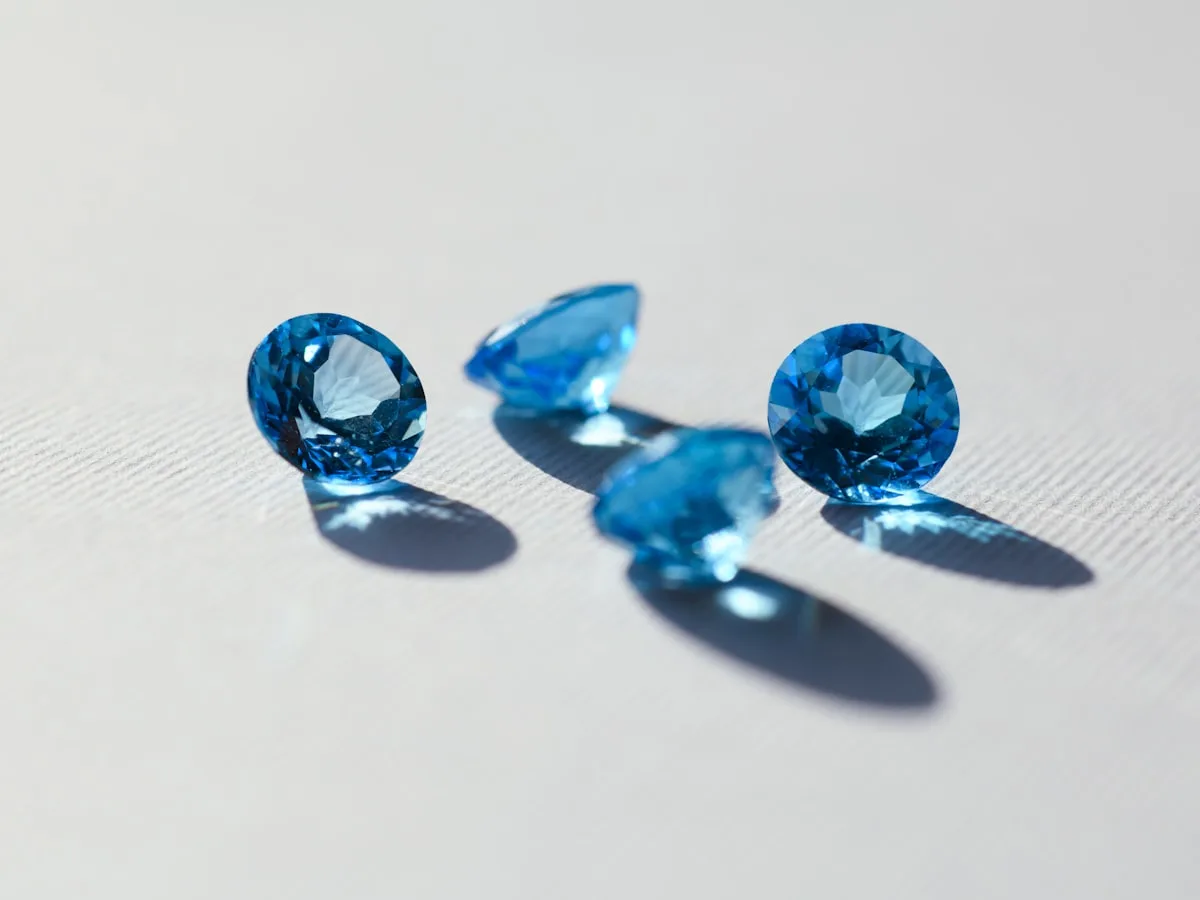
Petra Diamonds Limited (LON: PDL), the AIM-listed Africa-focused producer that owns South Africa's Cullinan Mine, has sold the 41.82-carat Type IIb 'fancy blue' diamond it announced to the market on January 13, 2026 — and the sale, disclosed in the company's Q3 FY 2026 results released the week of April 8, 2026, is the principal driver of a sharp quarterly revenue bounce that gives the British miner its first concrete piece of good news in a brutally difficult diamond-industry cycle. The stone, an Africa-shaped rough that Petra described in its January regulatory disclosure as of "seemingly exceptional quality in terms of both its colour and clarity," was sold via a competitive tender process rather than a public auction; the buyer's identity remains confidential, Petra received an undisclosed initial consideration linked to the rough's value, and the company has retained a 'significant economic interest' in the eventual sale of the polished product, a step it expects to take roughly twelve months.
Independent diamond-sector analyst Paul Zimnisky has called the stone "likely the largest high-quality fancy-blue diamond recovered in modern history" and "perhaps the most important diamond recovered this decade," with a valuation he places in the "tens of millions of dollars" — a comparison-based estimate at the top end of the range pencilled around US$40 million by MINING.COM, anchored on prices fetched by the 39.34-carat blue that Petra itself sold in July 2021 for $40.18 million and the 59.60-carat De Beers Cullinan Blue that Sotheby's Hong Kong placed in 2022 for $57.5 million. The combination of the gem's rarity, Cullinan's heritage, and the macro-context for natural blue diamonds is what is doing the price-discovery work — because Petra has not disclosed the actual tender outcome and is unlikely to before the polished stone is brought to market.
What the stone actually is
Type IIb diamonds — the technical classification that includes the world's most famous fancy blues — represent less than 0.1% of all natural diamonds ever recovered, a function of their unusual crystal chemistry. Where the great majority of natural diamonds are built almost entirely of pure carbon, Type IIb stones contain trace amounts of boron that have been incorporated into the carbon lattice during the diamond's formation deep in the Earth's mantle. The boron impurity absorbs warmer wavelengths of light and reflects the cooler ones, producing the grey-to-blue colour spectrum that ranges from the pale slate of mass-market stones up to the fancy vivid blue of the most valuable historical pieces — and which makes Cullinan-source blues, in particular, command auction premiums.
Petra's January disclosure language — "exceptional quality in terms of both its colour and clarity" — is more precise than it looks. Colour and clarity are the two distinct dimensions on which a fancy-blue rough has to perform for a high-end polished outcome: a deep saturation alone is insufficient if the stone carries internal inclusions that limit the yield a master cutter can extract. The reported Africa shape of the 41.82-carat rough (an outline that the Diamond Fields Advertiser in Kimberley noted on January 17, 2026 closely resembles the silhouette of the African continent) is gemmologically incidental but has become the visual signature used in nearly every news-image of the stone — and it has given Petra and its still-anonymous buyer a built-in marketing narrative for the eventual polished launch.
The tender sale — the news of April 2026
A tender is structurally different from an auction. Where a public-auction house like Christie's or Sotheby's invites global bidders to compete in real time on a stage, a tender is a private, time-boxed solicitation of sealed offers from a pre-vetted shortlist of buyers — typically a small set of high-end manufacturers and trade-side specialists known to be capable of handling, cutting, and ultimately selling the highest-end rough. The trade-off is price discovery: tenders typically generate less headline-grabbing pricing than a public hammer-fall but offer the seller more control over who the eventual buyer is, what cutting plan will be applied, and how the marketing arc for the polished product will be staged.
Petra's structure on this particular tender adds a second layer. The company received an initial consideration linked to the rough diamond's value — paid upfront — and retained a 'significant economic interest in the profit realised from the sale of the polished stone,' a transaction architecture that Petra's joint chief executives Vivek Gadodia and Juan Kemp describe as designed to "extract maximum value … while also allowing for the cutting and polishing of this stone in South Africa." That second clause is politically significant in the South African context, where the mineral-beneficiation policy framework has long pushed miners to maximise domestic value-addition rather than exporting raw resource. By cutting and polishing the 41.82-carat rough on South African soil — under Petra's continued economic participation in the polished outcome — the company has positioned this sale as a beneficiation-policy success at the same time as it is positioning it as a Q3 financial boost.
The full executive statement, from joint CEOs Vivek Gadodia (corporate strategy) and Juan Kemp (operations), is the cleanest line on the deal: "While the overall market remains challenging, especially in the smaller-sized segments, recovering a sizeable, exceptional quality diamond demonstrates the quality of Cullinan Mine's significant resource. The agreement we have reached on this blue stone will enable leveraging considerable experience in the manufacturing and sale of polished diamonds to extract maximum value for Petra while also allowing for the cutting and polishing of this stone in South Africa and we look forward to seeing the ultimate outcome of this magnificent gem."
Where the valuation sits — and what it compares to
Without a disclosed tender outcome, every number that has been attached to the 41.82-carat rough is a comparative inference from the history of high-end blue-diamond sales. The most useful framework is the recent comparables table — every fancy vivid blue stone of large size that has cleared a major auction over the last decade — because the cutting yield on a 41.82-carat rough is likely to deliver a polished stone of between 15 and 25 carats, which is the range these comparables sit in.
| Stone | Carats (polished) | Sale year | Sale price | Venue / source |
|---|---|---|---|---|
| Oppenheimer Blue | 14.62 | 2016 | CHF 56.8m (~$71.3m) | Christie's, Geneva (world record fancy vivid blue at auction) |
| De Beers Cullinan Blue | 15.10 polished from 59.60 rough | 2022 | $57.5m | Sotheby's, Hong Kong |
| Blue Moon of Josephine | 12.03 | 2015 | $48.5m | Sotheby's, Geneva |
| Petra's 2021 blue (from Cullinan) | sold as rough at 39.34 | 2021 | $40.18m (rough sale) | Petra tender |
| Cullinan Dream | 24.18 | 2016 | $25.4m | Christie's, Geneva |
| Mediterranean Blue | 10.03 polished from 31.94 rough | May 2025 | $21.5m | Sotheby's, Geneva |
The range across this set — from the Oppenheimer Blue at the top to the Mediterranean Blue at the lower end — is the price-discovery band against which the 41.82-carat rough will eventually be settled. Petra's 2021 sale of the 39.34-carat blue at $40.18 million as a rough (without yet cutting it) is the closest single comparable, because the seller-side economics of that deal track most directly with the structure Petra has just used. Zimnisky's framing — "likely the largest high-quality fancy-blue diamond recovered in modern history" — points the eventual polished outcome to the upper half of the table, which is where the De Beers Cullinan Blue and Oppenheimer Blue sit.
The Q3 FY 2026 numbers — the financial bump
Petra's Q3 FY 2026 trading update, the document in which the tender sale was disclosed, contains the most concrete financial read on what the stone has done for the business. Sales volume for the quarter totalled 781,797 carats — a 58% jump quarter-on-quarter from Q2's 494,237 carats, and a 40% rise year-on-year versus Q3 FY 2024's 558,651 carats. In dollar terms, revenue of $68 million was up 39% quarter-on-quarter and up 64% year-on-year. The headline boost was almost entirely attributable to the inclusion of the 41.82-carat rough in the tender book, but it sits on top of an underlying market in which Petra's average realised price per carat fell from $98 in Q2 to $87 in Q3 — a drop of 11% QoQ, even as it remained 17% above the year-ago figure.
The underlying pricing weakness is concentrated in smaller goods. Petra flagged a 15% reduction in like-for-like prices across all diamond sizes, with the larger-stone product mix at Cullinan partly mitigating that move at the mine level: Cullinan's average price per carat slipped just 9% QoQ, while Finsch — the other South African mine in Petra's portfolio, which produces a much higher proportion of smaller goods — saw average prices drop 22% QoQ. As a result, Petra has lowered its FY 2026 price-per-carat guidance for Finsch from a previous $75-85 band to $60-70, while holding Cullinan's $85-105 band unchanged despite a year-to-date Cullinan realised price of $118 per carat, an unusual upward outperformance for which the 41.82-carat stone is the proximate explanation.
Cullinan Mine: the most productive blue-diamond mine in modern history
The 41.82-carat rough is the latest in a string of generation-defining discoveries from a single mine. Cullinan, located north-east of Pretoria in Gauteng province, has been in continuous production since 1902 and is the source of the most famous gem-quality diamond ever recovered: the 3,106-carat Cullinan Diamond, found in 1905 by miner Frederick Wells and now cut into the Cullinan I (Great Star of Africa) and Cullinan II stones that sit in the British Sovereign's Sceptre and the Imperial State Crown respectively, with seven additional stones (Cullinan III through IX) held in the British Crown Jewels collection. Beyond that singular find, Cullinan has produced most of the most valuable blue diamonds sold over the last century, a track record that Zimnisky described to MINING.COM as making the mine "certainly one of the most interesting and iconic mines in the world, across commodities."
Petra acquired Cullinan from De Beers in 2007 in a transaction that converted the asset from a major-mining-house ledger entry to a single-asset focus for a smaller, AIM-listed specialist. The mine's expected production life under current planning runs through the 2040s — which means the 41.82-carat tender outcome and any successor finds over the next two decades will continue to cycle through Petra's results as one-off boosts on top of an underlying market that, as the company's own Q3 commentary acknowledges, is structurally challenged.
The industry context: lab-grown competition and the 'turning point' thesis
The sale lands in a deeply pressured moment for the natural-diamond industry. Across the last 24 months, miners have faced weak end-consumer demand — including in the structurally critical Indian retail market — intensifying competition from lab-grown stones, and economic uncertainty in the United States that has tightened bridal demand at the lower-mid price points. Rio Tinto completed the wind-down of its Diavik operation in Canada in March 2026, Lucara Diamond Corp. recovered its own roughly 37-carat blue in March 2026, and several major and mid-tier producers have signalled cost cuts, paused production, or structural reorganisations across the cycle.
Zimnisky's framing of where the cycle could turn is the more interesting part of his MINING.COM commentary, and worth quoting directly: "2026 could be a pivotal year for the diamond industry with the potential for multiple meaningful catalysts including the sale of De Beers, a US trade resolution with India, and a new phase of natural diamond industry marketing via the Luanda Accord. Sentiment has got so dire that we could very well be at a turning point just as few are expecting it." The Luanda Accord — a multilateral marketing pact among African producer states signed in 2025 — and the long-rumoured Anglo American sale of De Beers are both genuine structural catalysts; the US-India trade track is a political variable whose timing is harder to call.
The polished stone — and the 12-month wait
The single most important forward-looking piece in Petra's disclosure is the twelve-month cutting-and-polishing timeline. The tender buyer's identity will remain confidential through that window, the diamond will be cut on South African soil under master-cutter supervision, and Petra's retained economic interest will materialise as a share of the proceeds after the polished stone is brought to market — typically through a major auction house or a private sale to a top-tier collector or sovereign-wealth-style buyer. That schedule places the actual price discovery on the polished output somewhere in early-to-mid 2027, by which time the broader natural-diamond cycle's turning-point thesis will have either materialised or not.
What the 41.82-carat Cullinan blue has already done, however, is measurable. It has lifted Petra's Q3 revenue by approximately one-third on top of an otherwise softening price environment, given the South African beneficiation policy a marquee deal to point to, and reset the narrative around the natural-diamond sector at exactly the moment when lab-grown alternatives have begun to dominate the lower-mid retail price points. For an industry that, as Zimnisky put it, "has been hit from every angle the last few years," a single rough stone has — for now — delivered more publicity and more cash than most of the sector's strategic initiatives combined.