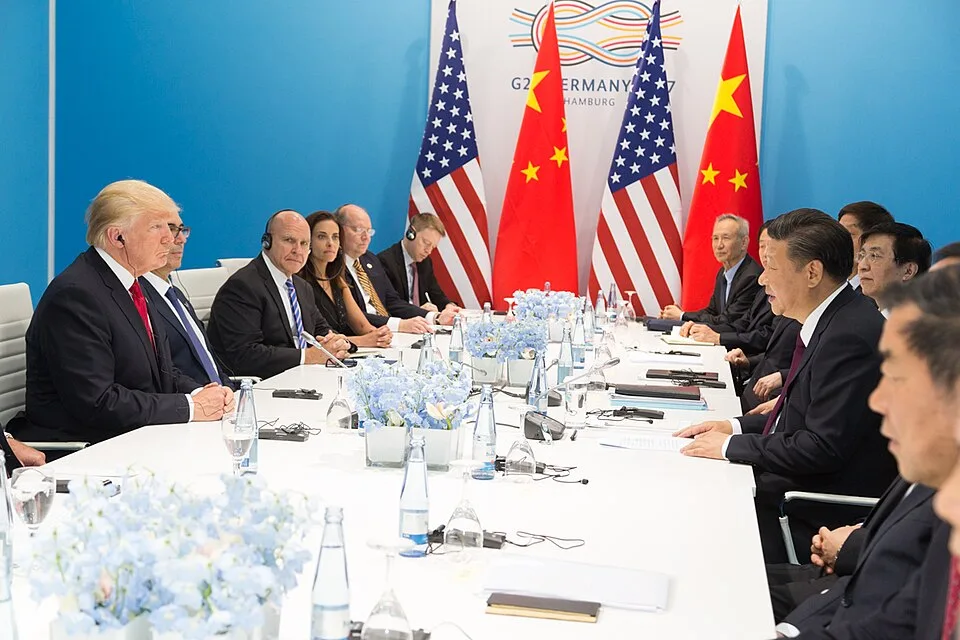
President Donald Trump is expected in Beijing for a state visit 13–15 May 2026 to meet Xi Jinping, the Chinese government’s formal notice and parallel U.S. planning traffic confirmed after weeks in which postponement looked possible (reported). If the trip holds, it will be the first such U.S. presidential entry to China in about 10 years—a gap that matters because trade, technology controls, and sanctions practice on both sides now move on administrative calendars that summit pageantry cannot replace (reported).
Guest lists tied to the visit pair cabinet work with senior U.S. corporate leaders, including Elon Musk and Tim Cook in most advance accounts (reported). Those names signal which industries Washington hopes can convert any leader-level goodwill into contracts and license clearances; they do not, by themselves, settle tariff lines, chip export rules, or how Chinese energy firms navigate Iranian crude sanctions (reported).
A fixed window, not a finished negotiation
Beijing’s protocol announcement anchors the ceremonial dates on 13–15 May; some U.S. framing has spotlighted 14–15 May for substantive sessions—treated by analysts as emphasis on the core sitting days rather than a denial that the wider visit is on (reported). That small gap between “when the plane arrives” and “when the hard meetings run” is typical of state visits; it still leaves every contested policy file to be argued on its own merits.
The table below distills what is public against what diplomats and compliance desks will still be negotiating once cameras leave.
| Item | What is known (reported) | What stays open |
|---|---|---|
| Summit dates | 13–15 May 2026 ceremonial window | Exact sequencing of bilateral sessions |
| Venue / host | Beijing; Trump and Xi | Detail in joint statements |
| Likely topics | Trade, artificial intelligence controls, Taiwan, Middle East fallout | Measurable commitments vs rhetoric |
| Corporate presence | Senior CEOs named in planning chatter | Final manifests; who actually travels |
Iran, oil, and why the calendar is crowded
The summit slipped once in public discussion while fighting tied to Iran lengthened and oil markets priced in tighter risk around Strait of Hormuz traffic (reported). The war does not pause because two presidents meet: U.S. Treasury pressure on Chinese refiners that handle Iranian barrels, banks that tighten compliance at the margins, and volatile crude prices all continue in parallel with whatever is said onstage (reported).
Diplomats will also carry October-vintage understandings on rare-earth export restraint that Washington treats as strategic, along with recurring friction over Taiwan arms sales (reported). Those files explain why neither capital can afford a visit that looks like pure celebration—both audiences will read the fine print for signs of retreat or escalation.
The business flank: who shows up and why it counts
Chief executives on a state visit matter when governments narrow political difference enough that contract teams can execute. In this case, advance plans—not final manifests—have featured auto and technology platforms, aircraft manufacturers and their engine partners, major banks, chipmakers, payment networks, and agribusiness names (reported). Cisco has already said publicly that its CEO was invited but would miss the trip for an earnings commitment (reported), a reminder that even confirmed invites are not confirmation someone boards the plane.
The sectors line up with industries that need Chinese market access, U.S. licensing, or both at once.
| Sector (reported) | Names recurring in advance lists |
|---|---|
| Auto / consumer tech | Elon Musk (Tesla), Tim Cook (Apple) |
| Aviation | Kelly Ortberg (Boeing), H. Lawrence Culp Jr. (GE Aerospace) |
| Finance | Larry Fink (BlackRock), Stephen Schwarzman (Blackstone), Jane Fraser (Citi), David Solomon (Goldman Sachs) |
| Semiconductors / hardware | Sanjay Mehrotra (Micron), Cristiano Amon (Qualcomm) |
| Payments | Michael Miebach (Mastercard), Ryan McInerney (Visa) |
| Other named invites | Brian Sikes (Cargill), Jim Anderson (Coherent), Jacob Thaysen (Illumina), Dina Powell McCormick (Meta) |
Aircraft: big numbers and a long paperwork trail
Agriculture and commercial aircraft are easier to package for a ceremonial win than a live dispute over the newest accelerator chips: pre-trip briefings repeatedly elevated those lanes while playing down an AI-flagship presence beside the president (reported). Aircraft orders also translate quickly into visual symbolism—fuselage logos, engine branding, and labor politics back home—without forcing immediate publication of sensitive technology transfer terms (reported).
Industry sourcing summarized in trade coverage has sketched a possible narrowbody package on the order of 500 737 MAX aircraft plus General Electric–powered widebodies, described in some accounts as the first major Boeing sale to Chinese customers since 2017 should financing close (reported). Boeing’s chief executive told reporters in April that political support could help unlock a long-delayed China deal, without guaranteeing a signature (reported).
Until delivery slots, insurer sign-offs, and regulator letters match podium rhetoric, the diplomatic benefit remains prospective—a gap equity markets sometimes cross in hours while logistics catch up over quarters.
Semiconductors and the executives who are not center stage
Apple and Tesla illustrate a different problem: huge revenue exposure to China for assembly, components, and sales means plant-level and licensing decisions will keep moving even if the summit produces a warm joint photo (reported). Tariff rates, product classifications, and end-user checks can all outlive a communiqué sentence.
Nvidia CEO Jensen Huang is widely reported as not expecting to join this delegation; planning chatter has described a White House emphasis away from spotlighting the flagship AI silicon brand on this leg (reported). Huang has said publicly that any invitation timing should come from the president—a candid acknowledgment that corporate stars follow political signaling here, not the reverse (reported).
Commerce Secretary Howard Lutnick said in April that U.S. rules had cleared H200 exports toward China while Chinese permissions and final sales had not completed—an example of how one product line can sit half-open while headlines declare progress (reported).
What will show whether the visit mattered
The durable outputs are unglamorous: matching or candidly divergent U.S. and Chinese readouts, executed farm and aircraft contracts that survive credit-committee scrutiny, a predictable rhythm of export licenses, and customs treatment that does not snap back within weeks (reported). Energy purchases and rare-earth shipment patterns will also tell observers whether economic gestures outlast the motorcade.
Leaders can affirm a bilateral channel without surrendering their toughest lines on Taiwan wording, Middle East paragraphs, or tariff tables—readers should expect simultaneous polish and tension. The proving period starts when staff work replaces stage lights: paperwork either converges with the rhetoric or it does not, and that is the story that will still matter after May 2026.